The Muck | Folio No. 2: Marrow, Mud, and the Ghost of a 15-Year-Old Poem
Writing is rarely a clean or easy process. Most of the time, it’s a struggle—a messy, complicated effort to turn a raw idea into something that actually breathes on the page.
You are reading The Muck, a newsletter named after the imagined place where Ocala, the central figure of my collection Death Roll, was born: a fictional meat ranch in the gut of Florida. To be a writer is to live in that swampy ground, trusting that the most vital stories only emerge when you aren’t afraid to get your hands dirty in the "unpolished" parts of life.
Each month, I share my current terrain in three parts:
The Hatchling: Raw, messy dispatches from whatever project I’m currently coaxing into existence.
The Specimen Jar: A look at the strange objects and folklore fueling my creative obsessions.
The Bellow: A megaphone for the literary community and the work of my peers that demands to be heard.
The Hatchling: Tending the Roots
Dearest Mucklings,
Looking back on April, I am still vibrating from my visit to my alma mater, the University of West Georgia. I was invited back by my former professor to visit his Intermediate Poetry classroom—the very same room where I once sat as a student, trying to find my voice. Walking that campus again felt like a visceral collision of the poet I was over fifteen years ago and the woman standing here today with Death Roll in her hand.
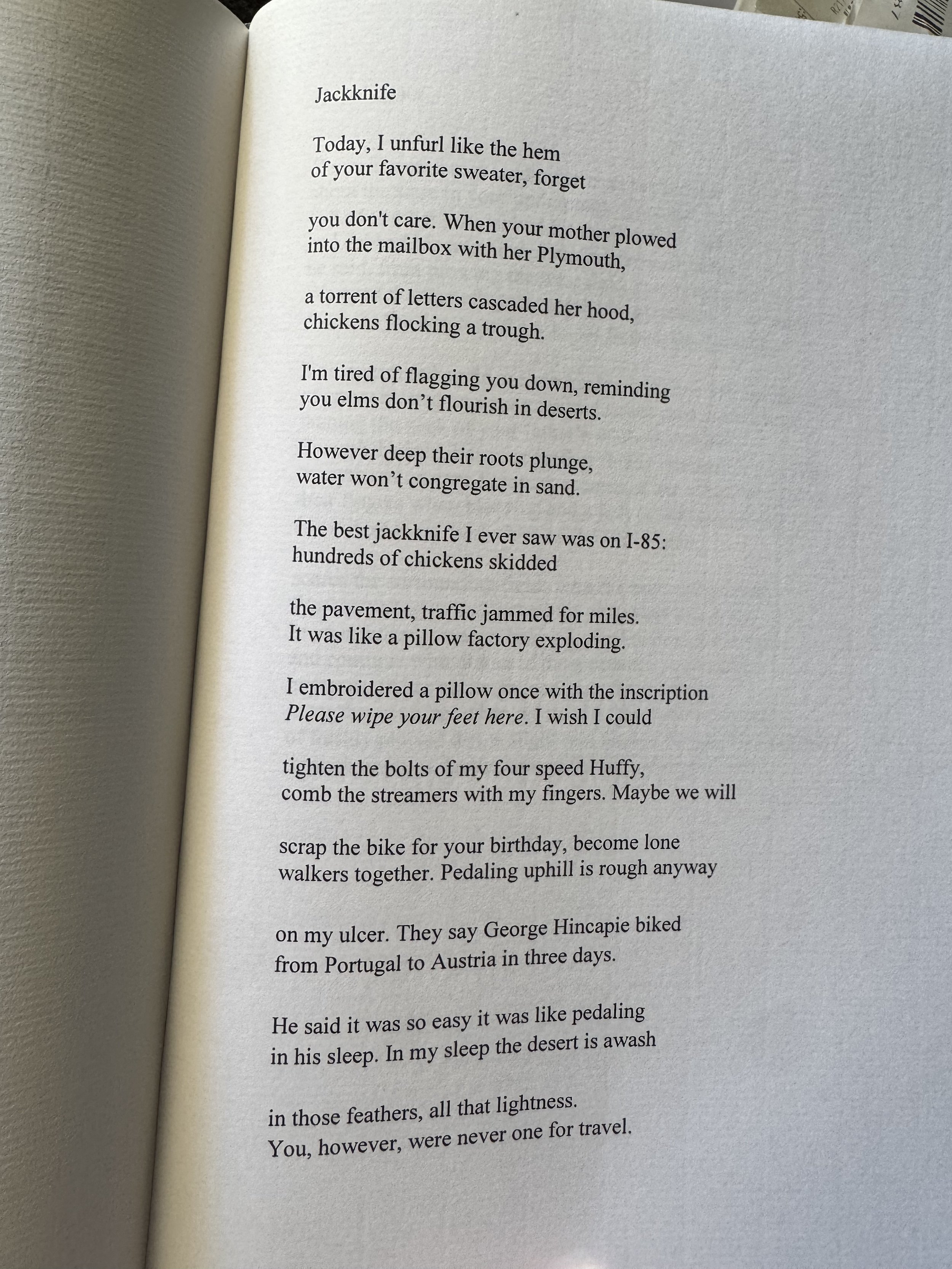
We don't just grow out of our roots; we carry the soil with us, and I was lucky enough to spend this past month back in the company of the people who first helped me tend that ground. Mentors, who have since become friends, were the ones who saw the swamp in me long before I knew how to name it. One such champion, my former professor who invited me to campus, floored me by quoting a line from a poem (one I had long since forgotten) I had written in his class over a decade and a half ago. To realize that a string of words stitched together in the uncertainty of my twenties has lived in someone else’s memory for that long is a staggering gift—a reminder that the things we create often outlast our own recollection of them.
A few nights after the classroom visit, I attended a local reading by Stephen Graham Jones. He was in town as the recipient of the Blackwell Prize, an annual award from UWG that honors writers who have made a significant impact on American literature. If you aren't familiar with Jones, he is a powerhouse of Indigenous horror and "slasher" fiction (The Only Good Indians, My Heart is a Chainsaw, I was a Teenage Slasher). I was able to meet him and chat briefly—a perfect moment of local literary community.
And now, Mucklings, that we’ve turned the corner into May, the wind is being put to work in a different way. I’ll be honest: I haven’t been doing much by way of creative writing lately. I am in a season of extreme “clerical” output rather than intake. Every ounce of energy is being spent on the continued, relentless outreach for Death Roll—the endless emails to bookstores, coordinating readings (much harder than I thought), and navigating social media.
This state of being is a death roll in and of itself. It is a violent, spinning fight between the drive to create and the physical and mental exhaustion that demands rest. My brain hums with a notebook full of ideas for my next poetry collection, yet my hands are too tired to stitch them together. It is frustrating to feel the creative impulse "sit in the shade" while the logistical side of authorship takes the sun, but I have to remind myself that this outreach is an act of protection—of ensuring I nurture my work in a different way so that it may reach others.
I take the advice I give to the authors I work with every day as an editor at Atmosphere Press: No one will know you have a book if you don't tell them. And I believe everything is worth an ask. It’s why I’ll get a wild hair in the middle of the night to email the Mütter Museum because Death Roll would absolutely vibe with their gift shop. Or why I’d email Anderson Cooper to share my book—his podcast on grief was one of my saving graces in the months after my grandfather died, a constant companion as I drove to OBGYN appointments. Or why I have no qualms about persistently following up with event coordinators who have left me on read. I am giving this strange alligator-child a fighting chance to reach the people who need her.
Next month will continue to be a whirlwind, but for different reasons. I was honored to receive a scholarship to attend the Convivio Conference in Italy, a nine-day symposium that serves as a nexus for artists, university professors, and scholars. Held in a historic hilltop hamlet, the conference provides a rigorous platform for cross-disciplinary inquiry, exploring the intersections of fine art, literature, drama, and film. I’m looking forward to engaging in workshops and lectures devoted to divergent thinking and the pedagogical power of cultural immersion.
I am hoping the change of landscape will be restorative. My plan is to come back energized to finally "attack" my novel revisions and continue the querying process with a clear head.
But even in the middle of the spin, I am anchored by the ghosts of earlier work. Sometimes, when the business of being an author feels miles away from the heart of being a poet, I look back at the lines that stayed. Scroll down below to the poem my professor remembered—a small, persistent ghost from my past that still haunts the present. (The remembered line was “It was like a pillow factory exploding.”
The Specimen Jar: The Art of Reanimation
I recently watched Maggie Gyllenhaal’s The Bride!, and while I know most critics and audiences didn't exactly fall in love with it, I found myself captivated. It was strange, imperfect, and delightfully odd—taking the kind of narrative chances that usually scare off a mainstream audience.
It felt campy in the best way, nodding to the stylized, gothic atmosphere of the 1935 original directed by James Whale. I’ve always been obsessed with the Universal Monsters; there is a primal beauty in their isolation. In fact, that obsession runs deep—I even incorporated the imagery of Frankenstein and the Bride into my own wedding. To me, they aren't just icons of horror; they are the ultimate symbols of being made of many parts and seeking a place to belong.
There is a profound importance in having this narrative told on film through the eyes of a woman or a queer man; these perspectives offer a necessary nuance to a myth so often dominated by a singular, traditional lens of "the creator." In Gyllenhaal’s hands, the focus shifts from the ego of the scientist to the visceral, complex experience of the one being stitched together. It values the autonomy of the "specimen" over the ego of the "scientist."
The Bride! got me thinking about one of my favorite Frankenstein-adjacent books, Reproduction by Louisa Hall. I was first introduced to this book in a Writing Motherhood class I took, led by Rachel Yoder, through Off Assignment, and I have since read it three times. It’s a genre-defying novel that explores the surreality of pregnancy, childbirth, and motherhood in a country in crisis. The story follows a novelist attempting to write about Mary Shelley, only to find her own painful experiences of motherhood forcing her to turn instead to writing a contemporary Frankenstein.
Hall’s work is incredible, and I thoroughly believe that when you factor in Mary Shelley’s own tragic history—the relentless cycle of miscarriages and the deaths of her children—Frankenstein ceases to be a simple monster story (I mean, it never was). I believe Frankenstein is a novel about motherhood. It is a visceral meditation on birth, loss, and the horrifying vulnerability of bringing something into the world that you cannot protect.
I feel a deep, quiet kinship with the impulse to take what has been lost and try to reanimate it through the page. The desperation of taking the dead and trying to reanimate them speaks tremendously to grief; I imagine Shelley writing through the ghosts of her lost children, trying to shock life back into what has been taken. When the physical presence is gone, art is often the only tool we have left to combat the silence. It is a desperate, holy labor. I think of my grandfather, and I think of how writing Death Roll was my own way of reaching into the dark to find his hand again.
We collect the scraps—a remembered line of poetry, the specific way the light hits the azaleas—and we graft them together. We hope that if we get the rhythm right, the spark will take. It isn’t just about memorializing; it’s about refusal. It’s a refusal to let the silence have the final word. In the "muck," we are all trying to make the dead things speak, not because we are obsessed with the macabre, but because we are obsessed with the survival of what we love. And while I am still waiting for a cinematic work to fully grapple with Frankenstein as a story of motherhood—one in which the lab serves as a visceral surrogate for the womb and electricity serves as the spark of a traumatic birth—I am profoundly happy to inhabit the world of The Bride! again and again.
The Bellow: Fresh Silt
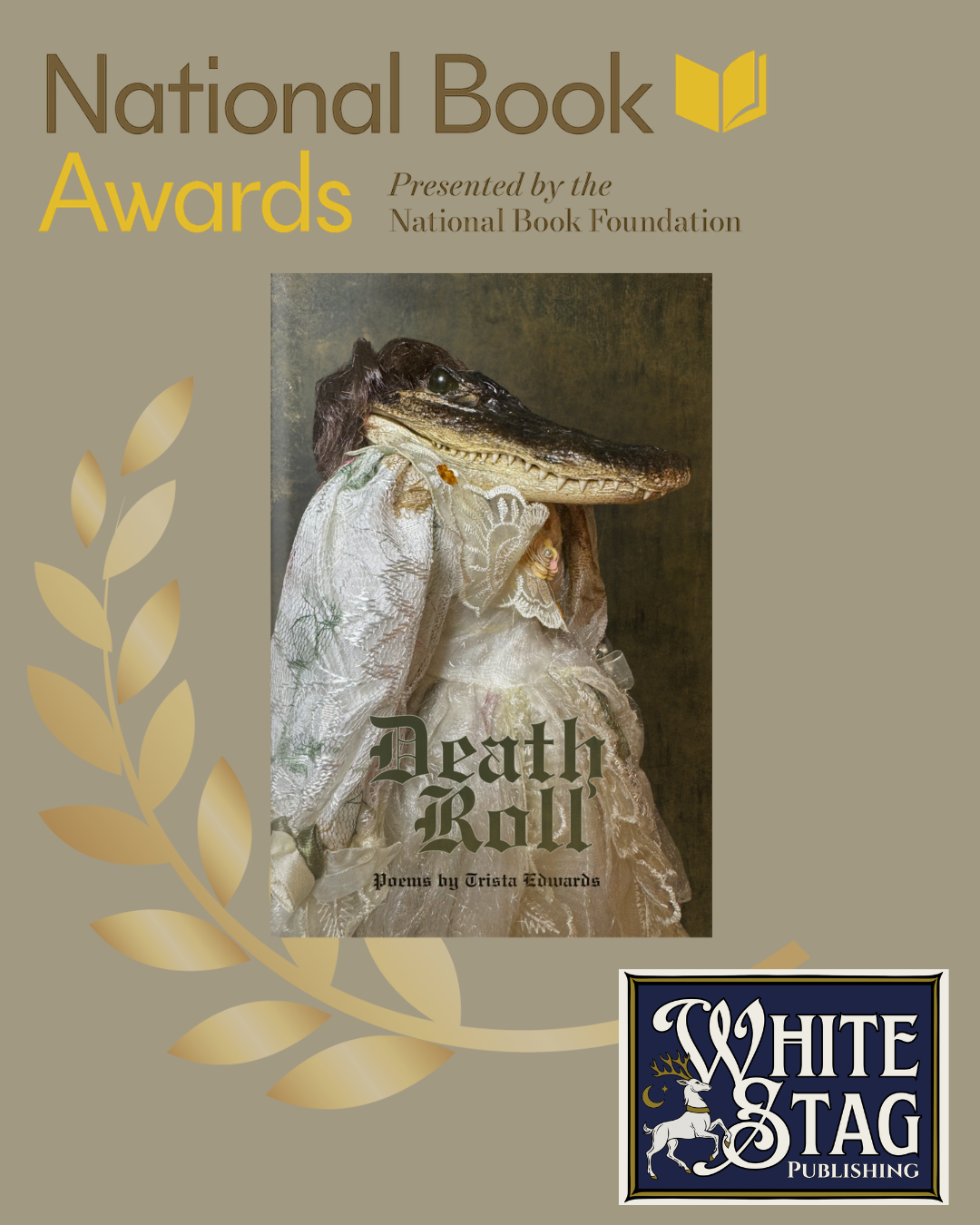
In an act of faith and advocacy, my press has officially submitted Death Roll for consideration in the National Book Award. To have my name even whispered in the same breath as such a prestigious honor is a profound gift. While the odds of a long shot are always looming, the recognition of the work at this level is a milestone I am choosing to cherish. It is a validation of the alligator-child’s voice, regardless of where she lands.
I am thrilled to recognize the stockists where you can find Death Roll:
Powell's Books (Portland)
Open Books (Chicago)
A Novel Idea (Philadelphia)
Rough Draft Bar & Books (Kingston, NY)
Please keep these White Stag press-mates on your radar for their new releases and pre-orders:
The Long Now by James Meetze
Celestial Bodies / Earthbound Wounds by Sadee Bee
Peacock Lane by RJ Ingram
Please also keep my dear friend Kim Garza's stunning new novel, Between You A River, on your radar. It is currently available for preorder and is a lush family saga set on the island of Mindoro in the Philippines. It follows two generations of de la Cruzes as they confront the sacrifices mothers made so their daughters could lead different lives, wrestling with long-buried secrets and the lifelong push-and-pull of home. While you wait for its release, I highly recommend picking up her 2022 novel, The Last Karankawas.
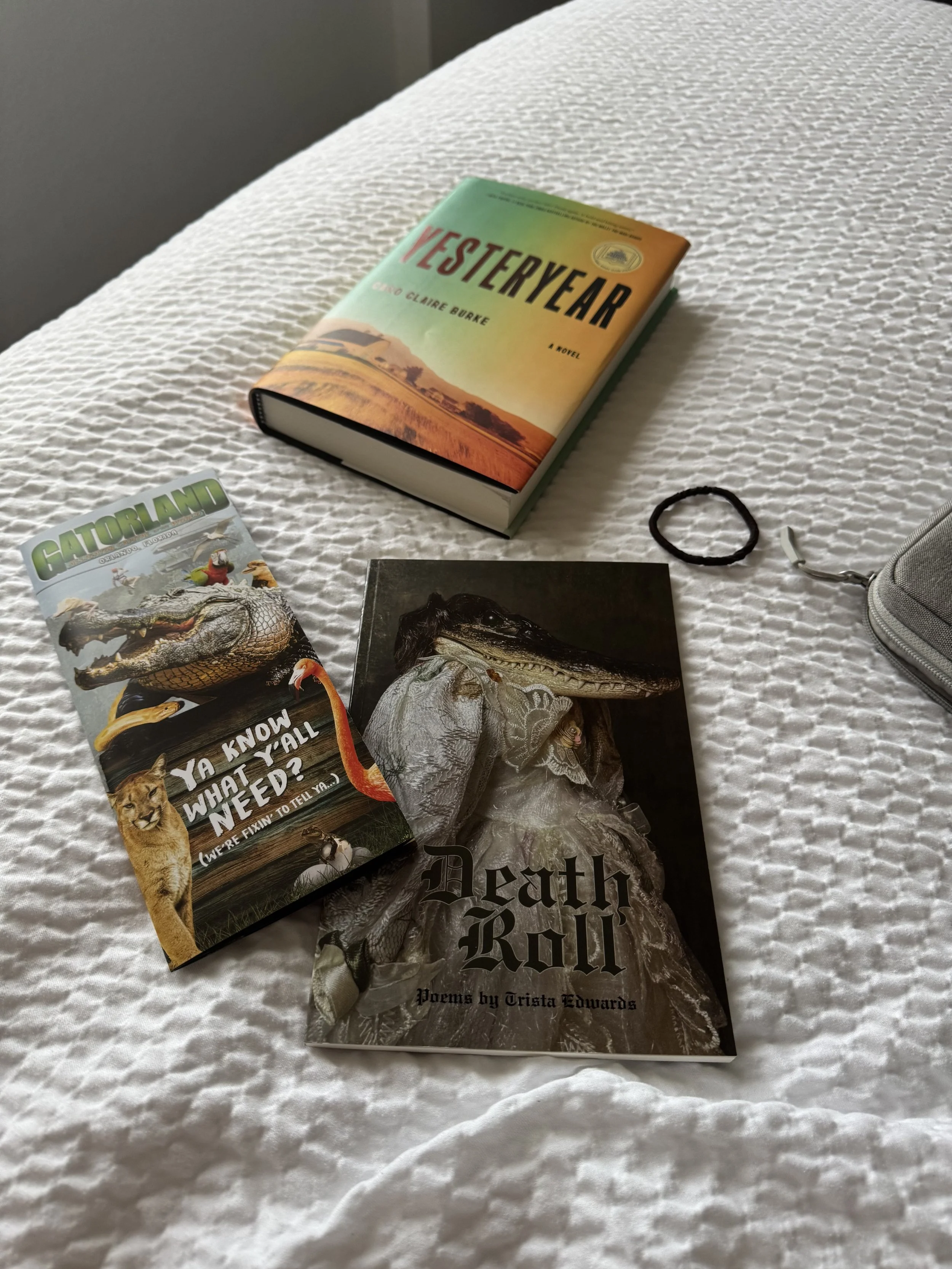
On my own nightstand, I am currently knee-deep in Caro Claire Burke’s Yesteryear. This debut novel is a dark and satirical exploration of fame, motherhood, and the "tradwife" movement. It follows a social media influencer who wakes up to find herself trapped in the brutal reality of 1855, forcing her to confront the stark contrast between her curated online life and the harsh reality of the past. It is haunting me in the best possible way.
Life is rarely perfect, and the creative process is even messier. But it’s in the muck where we find the stories that actually matter.
Stay Ferocious Yet Tender,
Trista
P.S. Haven’t got your copy of Death Roll yet? You can find it here!