The Muck | Folio No. 1: BunnyBees, Azaleas, and the Beautiful Drain
Writing is rarely a clean or easy process. Most of the time, it’s a struggle—a messy, complicated effort to turn a raw idea into something that actually breathes on the page.
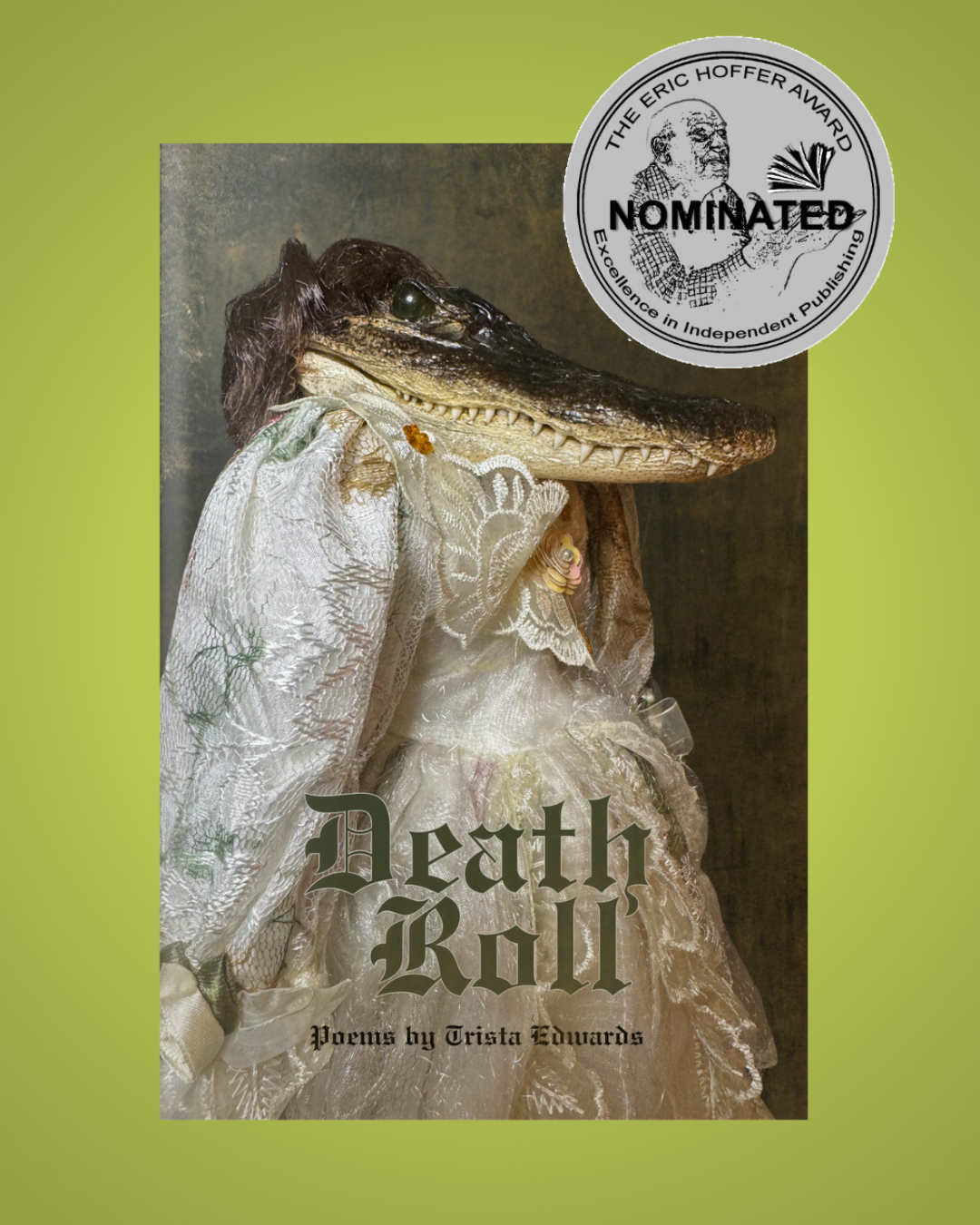
You are reading The Muck, a newsletter named after the imagined place where Ocala, the central figure of my collection Death Roll, was born: a fictional meat ranch in the gut of Florida. To be a writer is to live in that swampy ground, trusting that the most vital stories only emerge when you aren’t afraid to get your hands dirty in the "unpolished" parts of life.
Each month, I share my current terrain in three parts:
The Hatchling: Raw, messy dispatches from whatever project I’m currently coaxing into existence.
The Specimen Jar: A look at the strange objects and folklore fueling my creative obsessions.
The Bellow: A megaphone for the literary community and the work of my peers that demands to be heard.
The Hatchling: The Beautiful Drain
I want to be honest with you, Mucklings: I am feeling the drain. We are in a season of celebration for Death Roll, and while I am profoundly grateful for the life this book is taking on, there is a specific exhaustion that comes with it. It is a vulnerable thing to harvest your interior world and put it on a shelf for others to browse.
Next week marks the anniversary of my grandfather’s passing. Outside, the azaleas are blooming everywhere—vibrant, loud, and demanding. As I wrote in my poem "Hiss," they are a complex symbol for me. I remember planting an azalea the night before he passed. After I tucked it into the ground, I felt this intense urge to call my grandparents. It wasn’t an unusual act—I spoke to them often—but this particular pull felt strange and powerful, a haunting summons I couldn't ignore. I sat on my porch steps, covered in dirt and sweat in the humid Georgia evening, and spoke to my grandfather for the last time. Now, every bloom feels like a beautiful haunting, a sharp memory of what was lost in the very moment something was being planted.
Because of this, my novel has taken a backseat. It is a grief-heavy project, and inhabiting that headspace while managing the public energy of a book launch is a lot to ask of a nervous system. Layered into that drain is the constant, vibrating hum of motherhood. It is always beautiful and rewarding, but it is also—honestly—staggering. I am amazed daily at how I get anything done at all given the number of constant interruptions. There must be a study somewhere on the psychological effects of that "stop-start" rhythm on a mother's mental health.
Next week, the fog continues: I have to travel to Orlando and Tampa (pray for me to get through Atlanta TSA), not for Death Roll, but for my "day job" as an editor at Atmosphere Press, an Austin-based hybrid press I have worked for remotely for the past six years. I'll be representing the press at a series of conferences, and while I love the work, I feel like I’m operating on a weird autopilot right now. I am daydreaming about sneaking off to Disney Springs for one evening (hello, low-key Disney adult here). I’m imagining some precious alone time with a cocktail, a Gideon’s cookie, and some retail therapy to indulge my love for Mickey Mouse.
I am giving myself permission to let my novel sit in the shade for a moment while I focus on letting Death Roll bellow—doing the necessary outreach to make sure she is heard and amplified. In addition to the book work, I’ve been stewing on two nonfiction essay ideas that have lived in my head for years. I finally took the leap and pitched one to my dream publication, Oxford American.
Creativity is a wonderful and draining impulse. Despite everything on my plate, my brain refuses to quiet; it keeps humming with new ideas, new connections, new things to add to the heap. Even when I feel I am doing everything I can, there is that relentless whisper that it is never quite enough.
However, there is light in the labor. Next week, I am returning to my alma mater, the University of West Georgia, to speak with a class of poetry students about Death Roll. I hear they are sharp, curious, and eager to talk about "Ocala Writes Letters to her Brothers and Sisters in the Muck." Returning to the place where my own poetry roots were planted and finding students ready to wade into the swamp with Ocala is the kind of meaningful work that makes the exhaustion worth it.
We stitch ourselves together as we go, but sometimes the thread pulls tight.
The Specimen Jar: The Myth of the Patch
To find some levity to the demands of my to-do list, I recently took a trip with my husband and children to BabyLand General Hospital in Cleveland, Georgia. If you haven't been, the surreal quality of this landmark is hard to overstate—it is a sprawling mansion that functions as a fever dream of soft-sculpture midwifery. It is the home of the 80s phenomenon, The Cabbage Patch Kids. There are nurseries filled with "babies" and costumed nurse staff who perform live "deliveries" from a Magic Crystal Tree known as Mother Cabbage.
When I walked into the "hospital," I was hit instantly by that signature baby powder scent—a singular, nostalgic smell that is chemically fused to the identity of a Cabbage Patch Kid. It is a scent that immediately transported me back to a specific kind of childhood devotion.
I had my fair share of Cabbage Patch dolls as a child; I was always a CPK girl rather than an American Girl doll girl. Leave it to me to find the stranger object the more tantalizing one. On this trip, I got my daughter a doll of her own, but I couldn't help myself—I had to leave with a plush of a BunnyBee.
For the uninitiated, a BunnyBee is a delightfully ugly bit of Patch lore. It’s a hybrid creature—body of a bee with the long ears of a rabbit—that supposedly flies over the cabbage patch, sprinkling "magic crystals" to determine the gender of the babies (an archaic and problematic bit of "biological" binary-enforcing if there ever was one).
This BunnyBee is my latest newly acquired specimen. It sits in my workspace now, another tactile reminder of how we graft different worlds together, and it is already beginning to serve as the skeletal inspiration for future poems.
The Bellow: The Stacks
It is National Poetry Month, and I am leaning into the roar. I am incredibly honored to share that Death Roll has recently received IPPY and Eric Hoffer award nominations. To see this strange alligator-child recognized in such a way is a gift I don't take lightly.
If you want a taste of the collection online, you can find two poems from Death Roll recently published in Luna Luna Magazine.
I am also thrilled to recognize the newest stockists of Death Roll:
Powell's Books (Portland)
Open Books (Chicago)
A Novel Idea (Philadelphia)
Rough Draft Bar & Books (Kingston, NY)
Please keep these White Stag press-mates on your radar for their new releases and pre-orders:
The Long Now by James Meetze
Celestial Bodies / Earthbound Wounds by Sadee Bee
Peacock Lane by RJ Ingram
As for my own nightstand, I am currently submerged in Tiana Clark’s I Can't Talk About the Trees Without the Blood and P. Scott Cunningham’s Self-Portrait as the I in Florida. Both are haunting me in the best possible way.
Life is rarely perfect, and the creative process is even messier. But it’s in the muck where we find the stories that actually matter.
Stay Ferocious Yet Tender,
Trista
P.S. Haven’t got your copy of Death Roll yet? You can find it here!