The Muck | Folio No. 4: What the House Knows
Writing is rarely a clean or easy process. Most of the time, it’s a struggle—a messy, complicated effort to turn a raw idea into something that actually breathes on the page.
You are reading The Muck, a newsletter named after the imagined place where Ocala, the central figure of my collection Death Roll, was born: a fictional meat ranch in the gut of Florida. To be a writer is to live in that swampy ground, trusting that the most vital stories only emerge when you aren’t afraid to get your hands dirty in the "unpolished" parts of life.
Each month, I share my current terrain in three parts:
The Hatchling: Raw, messy dispatches from whatever project I’m currently coaxing into existence.
The Specimen Jar: A look at the strange objects and folklore fueling my creative obsessions.
The Bellow: A megaphone for the literary community and the work of my peers that demands to be heard.
Writing is rarely a clean or easy process. Most of the time, it’s a struggle—a messy, complicated effort to turn a raw idea into something that actually breathes on the page.
You are reading The Muck, a newsletter named after the imagined place where Ocala, the central figure of my collection Death Roll, was born: a fictional meat ranch in the gut of Florida. To be a writer is to live in that swampy ground, trusting that the most vital stories only emerge when you aren’t afraid to get your hands dirty in the "unpolished" parts of life.
Each month, I share my current terrain in three parts:
The Hatchling: Raw, messy dispatches from whatever project I’m currently coaxing into existence.
The Specimen Jar: A look at the strange objects and folklore fueling my creative obsessions.
The Bellow: A megaphone for the literary community and the work of my peers that demands to be heard.
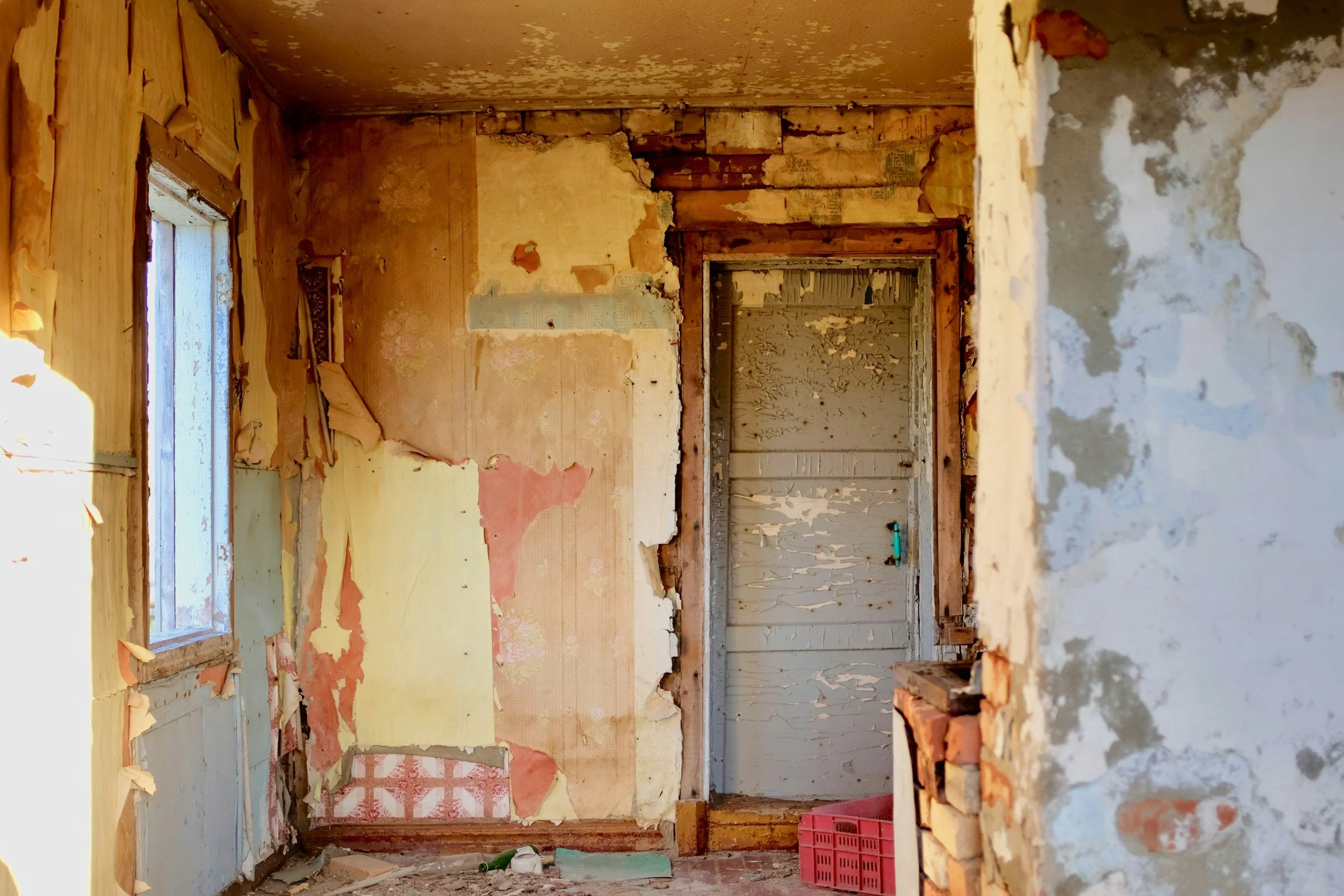
The Hatchling: On Not Writing and Hanging Wallpaper Instead
Dearest Mucklings,
July happened. I think. I'm sitting here trying to reconstruct it and finding mostly fog—the kind of month that happens to you rather than one you move through with any intention. I know I was there for it. I just can't locate it.
What I can tell you is that August arrived before I was ready, as it always does. My son is back at school—a new school, riding the bus for the first time, a new version of the morning that requires us all to be awake before six. On his first day, he walked to that bus like he had been doing it his whole life. My husband and I stood in the driveway afterward and just looked at each other, teary-eyed. It hit us harder than it hit him, which is exactly how it's supposed to go, and no easier for that. But the alarm goes off now, and the dark is still thick, and I am already tired. I don't want to do anything. I want to sleep. I spend the whole day thinking about sleep and wanting nothing more.
I promised you honesty when I named this thing The Muck, so here it is: I am exhausted in a way that goes all the way down. Physically, mentally, creatively. The post-Italy high of June burned off somewhere in the middle of July, and underneath it is the real, unglamorous work of a life that keeps demanding things regardless of whether I have anything left to give.
I signed up for Off Assignment's Writing Heartbreak course (I’ve taken several of these courses and loved them) hoping it would do what I needed it to do—pull me back into my novel revision, hand me the spark, bolster my motivation.
It didn't.
Heartbreak is one of the most subjective territories a writer can enter. What breaks one person open leaves another completely untouched, and I think that's precisely what makes it so difficult to teach. I kept waiting through the lectures, through the guest writers—for someone to get under the hood of it. Not the emotional experience of heartbreak, which everyone addressed with care and sincerity, but the craft of it. How do you make a reader feel something they haven't lived? How do you write grief without sentimentality eating it alive? How do you find the image that does what the emotion alone cannot? I know these questions have no clean answers—that's part of what makes them worth asking. I just wanted someone willing to get muddy with them alongside me.
The novel is still here. It has been here since December. The revision slump moved in shortly after and has not left. We are going on seven years with this book, and I will be honest about the shame that lives in that number, even as I am well aware that the shame is invented. The timeline is made up. There is no authority handing out demerits for slow novels. And yet. The number sits there taking space in my mind.
I touch the novel every day—thinking about it, outlining a revision plan, trying to make the rest of the year feel manageable rather than impossible. That has to count for something. Some days it does. Some days it just feels like standing outside a house I can't get into, rearranging the welcome mat.
What I can get into, apparently, is my dining room.
I hung wallpaper last week. Wallpaper I bought in February, sitting in a box in that room since then, patient as a stone. Our goal was to get it done before school started. We did. And standing there looking at it, I felt something I have been chasing in the novel for months—the particular satisfaction of a vision that had been living only in your head finally finding its way into the world.
The room wasn't wrong before. It was white. Clean, blank, full of potential that had no shape yet. I had the color for the room in my mind—had been carrying it around since February—and the distance between that internal image and the actual walls was just time, effort, and the willingness to commit. Which, I am realizing, is also a description of revision.
When I had Marvel + Moon, my candle studio, I talked a lot about hearthcraft —the idea that the home is its own kind of magic, that the way you tend a space is a form of devotion. I still believe that. What I love about decorating is what I love about language: it is all vibes and instinct and the slow accumulation of meaningful choices. The right object in the right corner. The right word in the right line. Nothing mass-produced. Nothing that doesn't belong. I can spend hours in that mode and never once feel the resistance I feel when I sit down to revise.
But a home is not only decoration.
Last month we got our septic tank serviced. This is not a glamorous sentence. There is no aesthetic to a septic tank, no vibe, no vision you carry around in your head for months until you're finally ready to commit. It is simply the unglamorous infrastructure that keeps everything else from falling apart. My husband and I have these conversations regularly now—the grown-up, deeply unsexy conversations about the money you spend on things you cannot see. The plumbing. The HVAC. The insulation in the walls, the drainage in the yard, the gutters cleaned before the storms come. It's money that disappears into the bones of the house, invisible, unremarkable, absolutely necessary. Without it, the beautiful wallpaper is just pretty paper on a failing wall.
The novel has a septic tank problem.
What I love—what has always come naturally to me—is the language, the atmosphere, the specific sensory world of the thing. The vibes, if we're being honest. I can write a room you can smell. I can write grief sideways through the wrong details. That part feels like decorating: instinctive, joyful, mine. What I struggle with is the infrastructure. Structure. Plot. The load-bearing work underneath the beautiful language that makes a novel actually hold. The unseen maintenance that keeps the whole thing from backing up.
This is what seven years looks like from the inside. Not laziness. Not lack of love. Just the ongoing, expensive, unglamorous work of learning to maintain something I only know how to (most desire?) decorate.
But then the wallpaper went up, and immediately the curtains were wrong.
Not bad curtains. Just wrong curtains—curtains that made perfect sense against white walls and now had no business being in this room. And the chandelier, the farmhouse-style fixture the previous owners left behind that I have never once liked, suddenly announced itself with new urgency. It has to go. The room has developed opinions. That's what happens when you commit to a vision—everything that isn't the vision becomes visible.
So now I'm standing in the dining room at odd hours, just looking. Dreaming a Victorian curio cabinet into the corner, something with glass doors and dark wood to house my vintage Halloween collection. Imagining what art will live on the walls, what objects will earn their place in this new version of the room. The wallpaper didn't finish the room. It started a conversation the room is now having with everything in it, and some things are answering wrong.
This is also, I am realizing, revision.
You fix one thing, and it illuminates everything adjacent to it that still needs work. You solve a chapter and suddenly the chapter before it is asking questions you didn't know it had. The novel, like the dining room, keeps generating its own next problem—and the trick is learning to see the wrong curtains not as failure but as the room knowing what it wants now that it has enough of itself to know.
I'm not always able to do that with the novel. With the dining room, I find it thrilling. I'm already scheming. I fell asleep last week mentally rearranging furniture I don't own yet, pricing out chandeliers, imagining candlelight on dark Victorian wood and the glint of antique glass. The Halloween collection deserves a proper home. The room deserves to become fully itself.
I just have to find a way to want that for the novel too. To stay in the room long enough to let it tell me what it's missing.
The fog will lift. It always does. Until then, I'll be in the dining room.
The Specimen Jar: Silk & Sequins
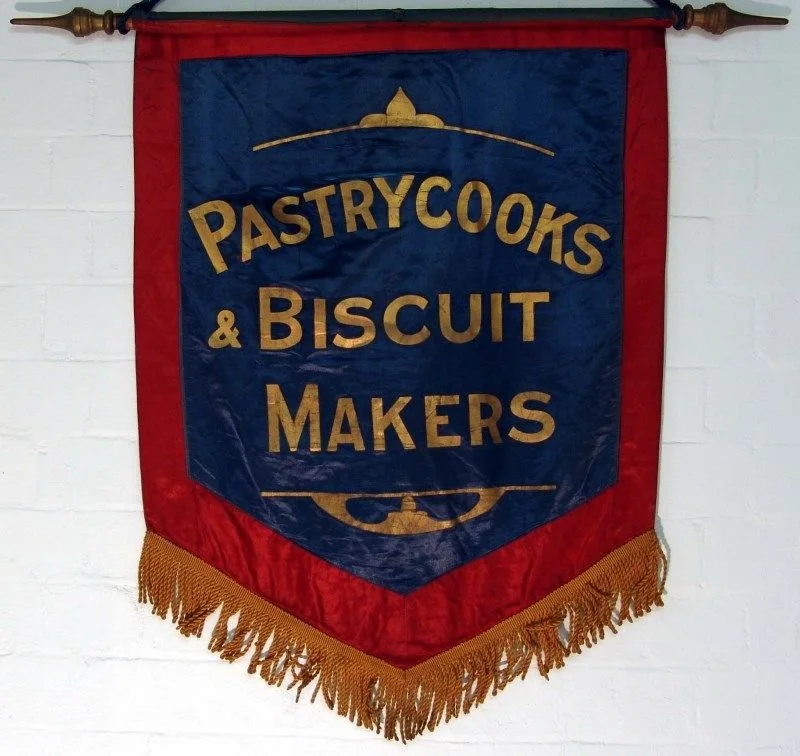
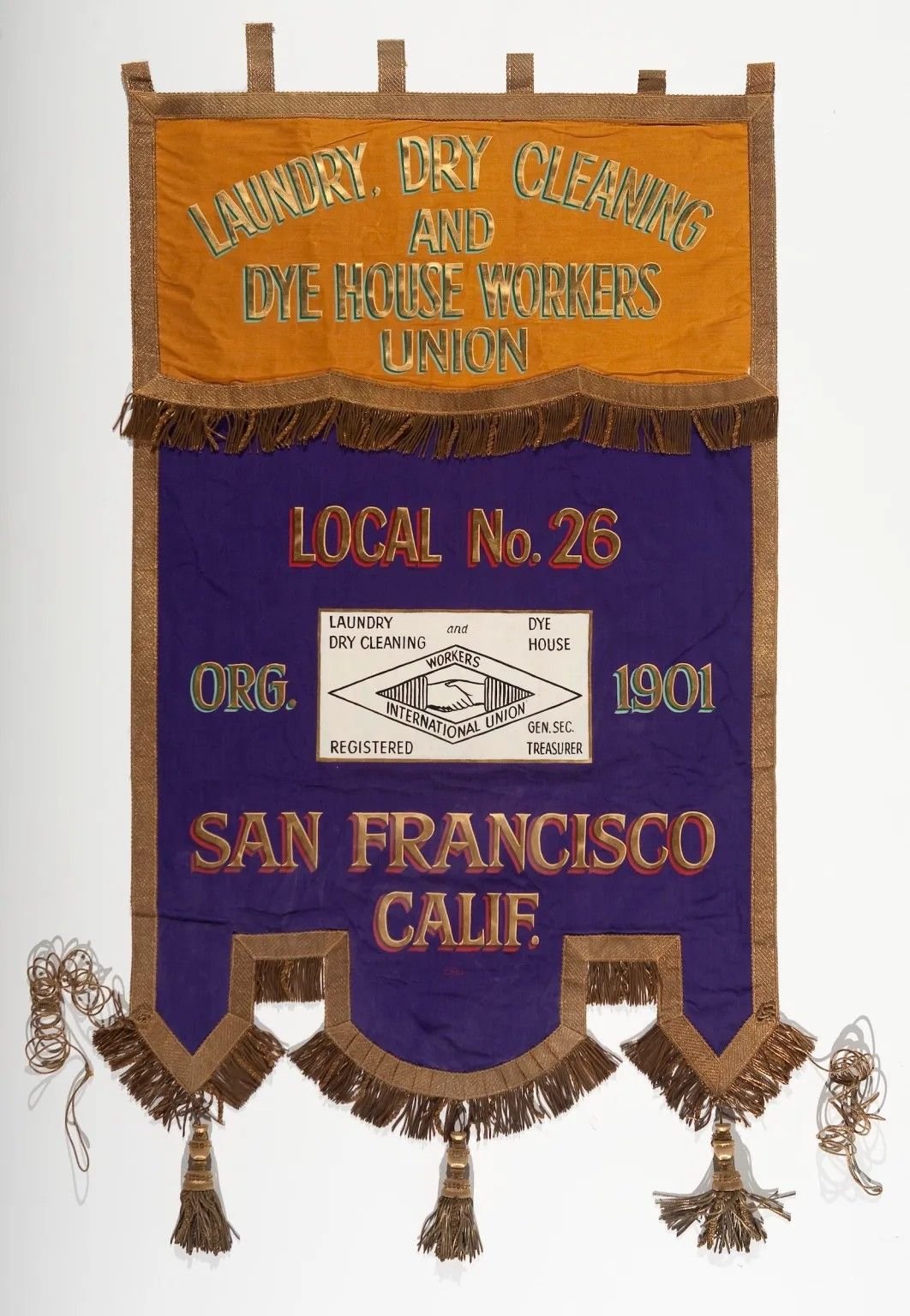
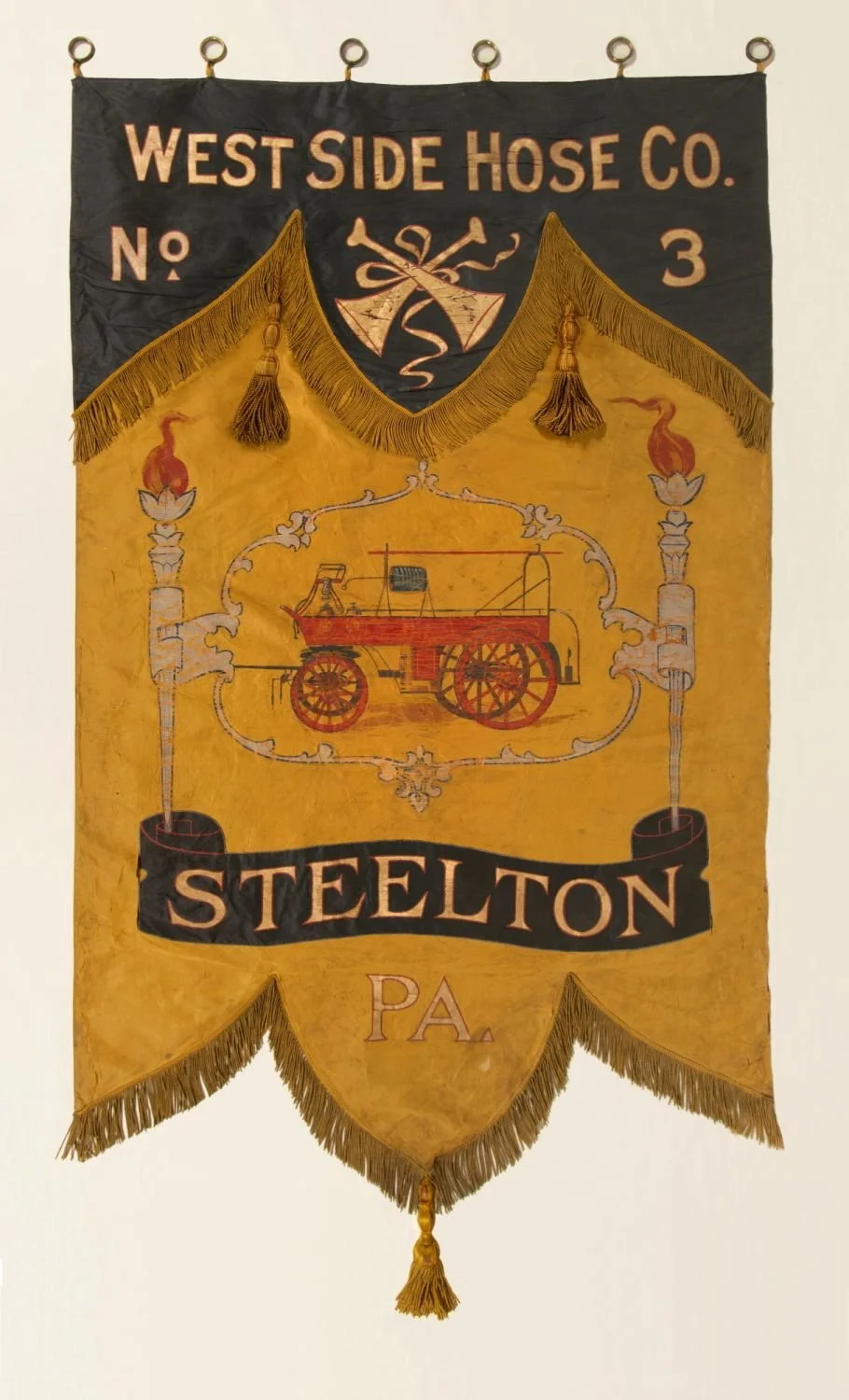
I have been obsessed with trade and union banners for a while now—especially the old ones, the Victorian-era ones. Enormous silk panels, hand-painted with allegory and pride, carried through the streets at processions and strikes and demonstrations. They were not subtle objects. They were not meant to be. They were declarations: of craft, of solidarity, of the radical idea that the people who made things deserved to be seen while making them. The iconography was rich and deliberate—clasped hands, eagles, the tools of the trade rendered with the same devotion reserved for saints. They were, in the truest sense, sacred objects for a secular cause.
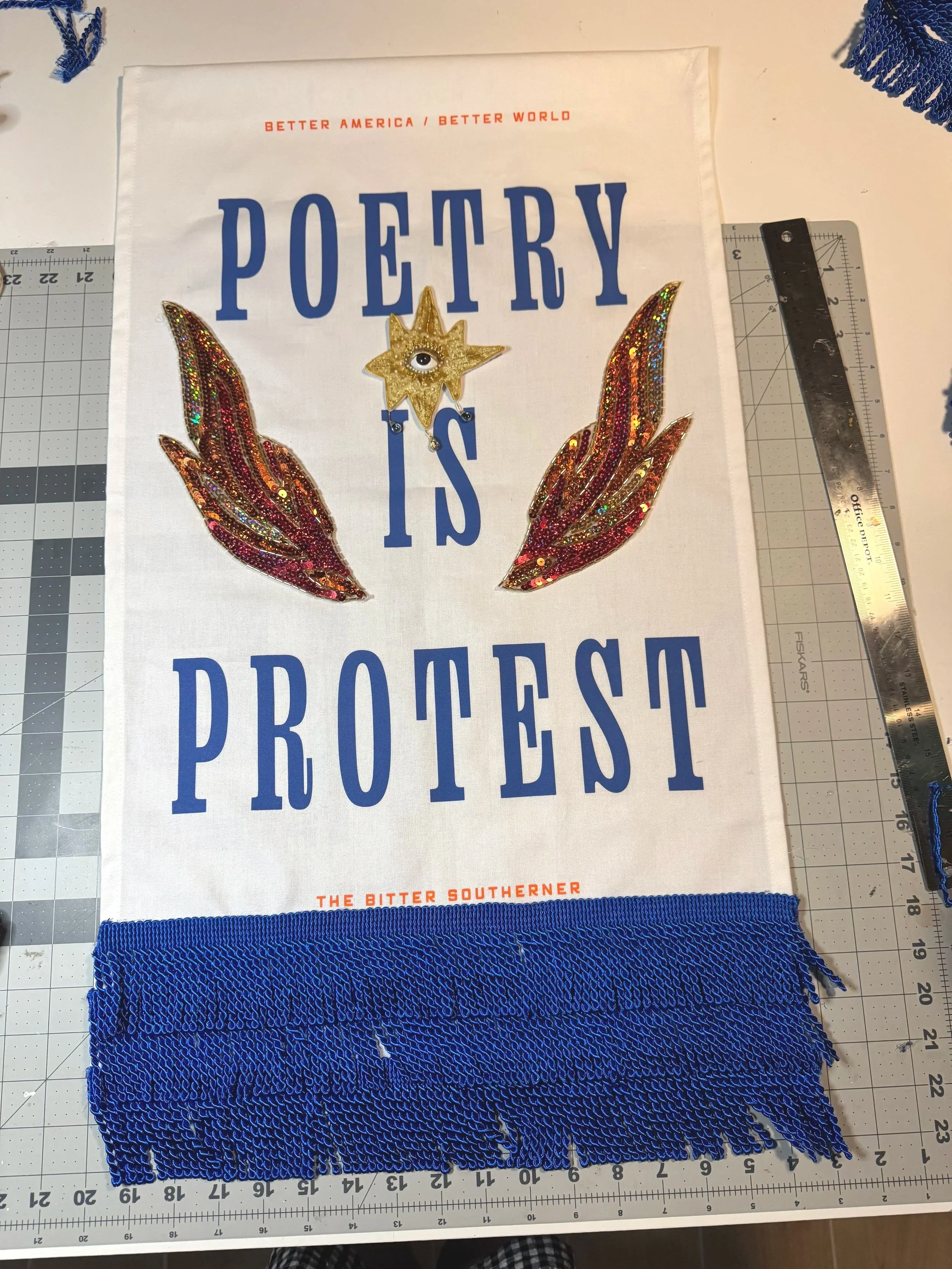
So when The Bitter Southerner released a tea towel — Poetry is Protest / Better America / Better World—I ordered it immediately, knowing it wanted to be a banner of sorts.
It is not a traditional trade banner, of course. But I am inspired by them. I've been adding to it the way I add to anything I love: slowly, instinctively, with objects that feel right. Iridescent sequined flames, holographic and catching every bit of light in the room. A gold star with an eye at its center—watching, always watching. Blue fringe at the hem, the kind that swings when you carry something.
I don't know exactly where it ends up when it's finished. But I do have a dining room with freshly hung wallpaper, a chandelier that needs replacing, and a wall that is asking for something with weight and intention.
The Bellow: Come find me
On August 30th at 6:30 pm EST, I am reading as part of Hearts on Fire: A Conjuring from the Aether, a free online poetry reading celebrating the release of my White Stag press-mate Fox Henry Frazier's Break Blow Burn. Six poets. Poems of resilience and beauty, love and loss, tenderness and ruin. The lineup is stacked: Fox Henry Frazier, Lisa Marie Basile, Kailey Tedesco, Patricia Grisafi, Ann DeVilbiss, and me. This is going to be one of those readings you feel for days afterward. Come be there.
And if you can make it in person—mark September 17th on your calendar. I will be giving a reading for Death Roll at Berry College in Rome, Georgia. More details to come, but I would love to see your face there.
As for my own nightstand—it has been the summer of the novella. There is something about the form that feels exactly right for this particular season of fog and exhaustion: long enough to go somewhere, short enough to actually arrive. (Which has also led me to start questioning: is my novel perhaps wanting to be a novella? Maybe.) This month I've been inside The Mermaids by Robert Edric, The Crane Husband by Kelly Barnhill, A Short Stay in Hell by Steven L. Peck, and Automatic Noodle by Annalee Newitz. Four very different worlds, all of them doing something strange and precise with a small amount of space. Highly recommend surrendering to the novella if you haven't already.
Life is rarely perfect, and the creative process is even messier. But it's in the muck where we find the stories that actually matter.
Stay Ferocious Yet Tender,
Trista
P.S. If you haven't yet, you can order your copy of my poetry collection, Death Roll, here. Ocala and I are forever grateful for your support!